Have you ever thought about reading the world? You may even ask: what does reading the world even mean? In my Literacy class, one of the first questions we were asked at the beginning of the semester was: what is a text? Most people would immediately think of a book, newspaper...the written word. But what about musical notes on a score? Don't we say that people can "read" music? But does a text have to be read? What about the strokes of a brush on a canvas? Is that a text? While my view may be really broad, I characterize literacy as learning how to read the world. This may be knowing how to read a book or newspaper, notes on a score, brush strokes on a canvas, the motives or objectives of a character on stage or a person in history, or being able to understand or at least question the events of the day. Everyday we read the world, most of the time without realizing it. We interpret what we see and make decisions or judgments based off of it. We question what we see, hear and read and try to come to conclusions. So is my definition of literacy too broad or even fathomable? It is to me.
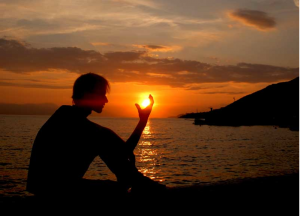
I hope to be able to teach my future history, ESL and theatre students how to read the world. In history I want students to explore the past with questioning and searching eyes. Not only will they read sections of the textbook, but more importantly they will read the actual words of the people who lived long ago and not so long ago. This includes varying levels of writings from the Declaration of Independence to letters written home from soldiers at Pearl Harbor. I will prepare them for the different types of documents they read and help them understand what they read by engaging them in the text. They will have the opportunity to see the world through the eyes of another and put themselves in the shoes of the people of old. They themselves will write letters as if they were these people. They will ask questions about them: how old were they, how many brothers and sisters did they have, what was life like for them when they were a kid or teenager, why did they decide to go to war, was it a hard decision, who supported them, who were their friends during the war, was it hard for them to kill another person, what do you think that was like...Through these questions students will identify with the people of the past and be able to write about them and their decisions. They will be able to argue for or against a decision, take a complicated event in history and write it for a 3rd grade class, and think about what they would have done if they were in their place. They will see that there are people in the past who have been forgotten, who have been written out of the books or pushed to the side. They will find these people and learn about them. They will see that there are people today who feel as though they have been forgotten and pushed to the side. They will learn how one simple act can change the course of history. They hopefully will take what they learn and use it in their own lives to read the world around them.
With any ESL student I want them to see that their way of reading the world is just as important as this new culture's way of reading the world. For ELLs, not only are they learning a new language, but they are learning a new culture which may be profoundly different from their own. We cannot push one culture aside for another. Both ways of reading the world are important. Also with all students, but especially with ELLs, it is important to find connections between them and what we are learning. You have to build on their background knowledge and make it applicable to them, otherwise I think many students get lost.
In theatre, students learn to read the world as they learn how to portray characters on stage, how to work with others as a team and explore the people around them, the person within them and the people on stage. Preparing students to read a script is essential, whether it is an Ancient Greek text, Shakespeare, Beckett or
Les Mis. Not only will there be words that they do not understand, but actions of the past that may not make sense to them. Discussing what we read and how we can make sense of it, is important in helping the students connect with the individual characters, especially when they begin to portray them. But theatre is not only about acting and reading plays. It is about learning to read and explore the world. Theatre of the O
ppressed is a perfect example of exploring territory that a lot of people choose to push away. It is about exploring feelings, problems, solutions... Theatre is a place where students learn who they are. They learn to read themselves.
Whether students are playing a piece from Mozart, painting a figure on a canvas, portraying Macbeth, passing a basketball to a teammate, reading a letter from a Civil War soldier, exploring the world of the internet through research, creating a glog or public service announcement...they are all engaging in some form of literacy that will help them learn to read the world around them.

Marti,
ReplyDeleteYour disciplines are so conducive to critical literacy! In history, you challenge students to see multiple perspectives from forgotten people. In ESL you teach children biculturalism. In theater you get at the heart of empathy and understanding by teaching kids to put on the persona of someone very different from themselves. Not only will you be an exceptionally marketable teacher, but you will be a powerful educator who helps students challenge perspectives and make informed, educated decisions about what to believe. By exploring how others in the past have stood up for themselves or been trampled upon, you can help students recreate the good parts of history and protect themselves against the bad parts.
I appreciate your idea of "reading the world." The word "read" has nearly fifty definitions in some dictionaries, so it's wise of you to step out of the pigeon-hole definition of literacy as the ability to read the printed word.
Ryan
Thanks for a poetic posting! I think Ryan pretty much summed it all up for me, but I, too think that "reading the world" is really powerful. For instance, students can read historical and current maps and use critical literacy to note where the rich and poor people live and who gets the libraries and other social resources in their communities. Or they can read other everyday texts that reveal "taken for granted" cultural norms, and then have discussions that challenge those norms. I really think that reading the word can be used to enhance students' reading of the world as well, and that students' reading of the world can be used to enhance students' reading of the word.
ReplyDeleteThanks for a beautiful final posting! Just what I would expect from you. Good luck in all of your future teaching endeavors. :)